Real estate developers should be aware of MahaRERA Project Extension deadlines, such as the MahaRERA project completion date and registration expiry. The project registration under the MahaRERA is valid for a certain number of years, and the stated completion date has legal implications. Failure to file an extension application before expiry may lead to lapsing or revocation of the project. This may hamper the process of marketing or selling units, affecting the continued transactions, confidence of the buyers, and the project's credibility.
An MahaRERA Project Extension application filed on time will guarantee continuity in the regulations, safeguard the legal status of the project, and help to avoid unnecessary compliance complications. ReraOne can help you to file your extension of the project in time, and everything in accordance with MahaRERA regulations.
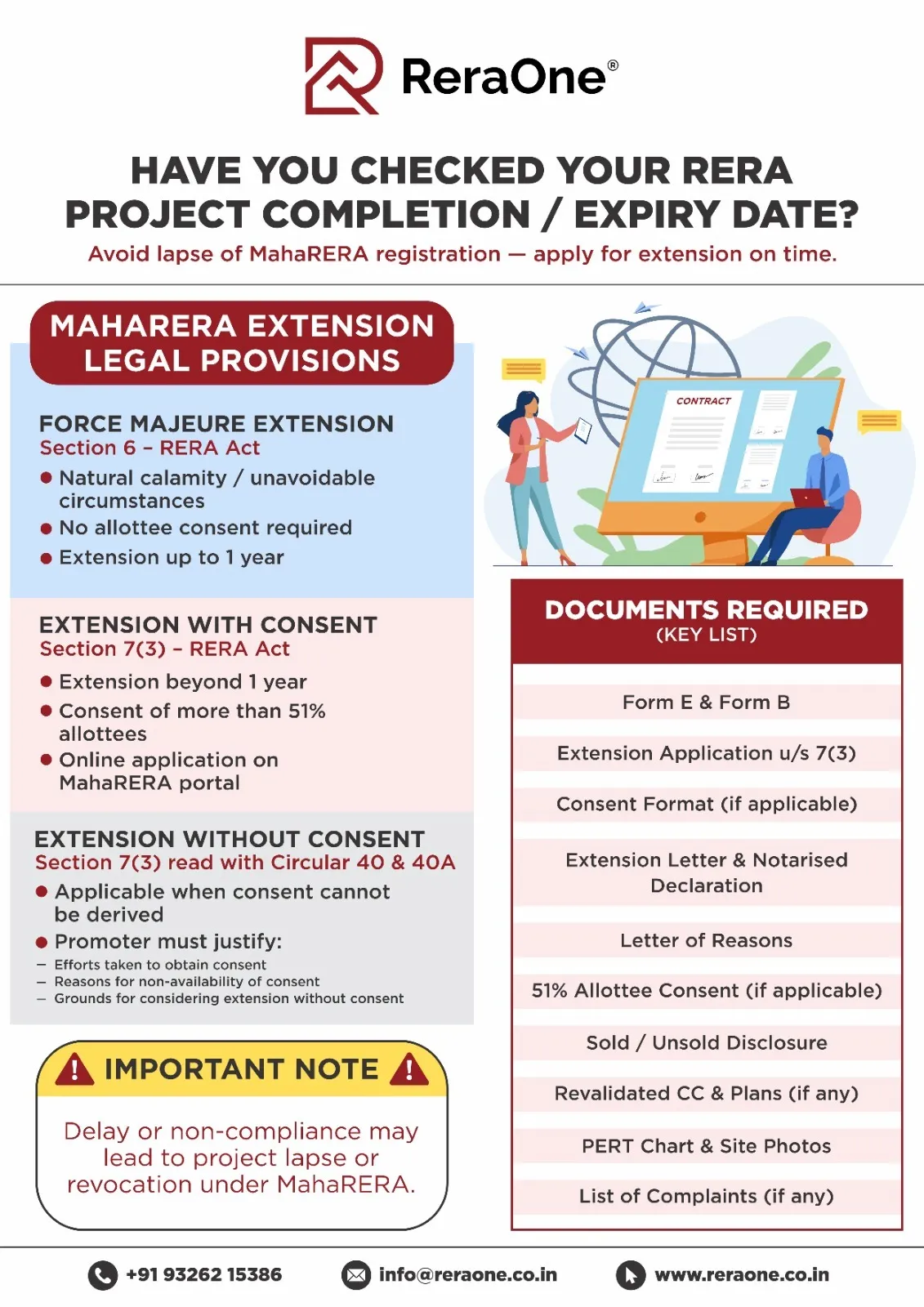
A promoter may apply to have a MahaRERA Project Extension under Section 6 of the RERA Act due to the use of force majeure circumstances, such as:
Key Features:
This is only possible in case of delays due to extraordinary external events, which freeze progress and ensure the MahaRERA Project Extension does not exceed the limits of the law.
Section 7(3) of the RERA Act states that an extension of over one year must be given to over 51% of allottees. The extension application should be submitted to the portal of MahaRERA, with supporting documentation and justification.
This is the most popular claim path when delays are caused by commercial, financial, and construction-related factors, but not by external factors.
An extension not requiring the consent of allottees may be granted in certain circumstances, as provided by Section 7(3) in conjunction with circulars 40 and 40A, when:
Promoters must demonstrate:
It is a discretionary process that will be subjected to rigorous consultation by MahaRERA.
Before the current MahaRERA registration expires, an extension application is to be made. Leaving it to the last can cause undue stress and leave the project vulnerable to any form of regulation. Also, it is important to make sure that all the statutory reporting requirements, such as the Quarterly Progress Reports (QPR) and Annual Progress Reports (APR), are up to date.
In the case of QPR, every quarter ought to include:
The APR should be submitted to all completed financial years and should contain:
The inability to submit the MahaRERA Project Extension application in due time can lead to the expiry of the MahaRERA registration, which will have a disastrous effect on sales, marketing, and other financial operations.
The following are the documents that will be required in a typical MahaRERA Project Extension application:
When applicable:
Application of a MahaRERA Project Extension is not merely a form-filling process but a very important regulatory process. MahaRERA also inspects the history of compliance, construction activity, and financial disclosures of the promoter of the project and subsequently approves the extension. The developers who regularly file QPR and APR and prepare the documentation in advance usually have a smoother approval process.
By approaching the MahaRERA Project Extension process as part of ongoing compliance planning, developers can avoid unnecessary delays, safeguard the project’s legal validity, and maintain market confidence.
For seamless navigation through the MahaRERA Project Extension process, you may always rely on ReraOne to provide you with the comfort of staying within the track of your project to stay on track and functional. ReraOne will make sure that you meet regulatory deadlines and assist you in each step to a successful process of extension.
Our experts are here to help.