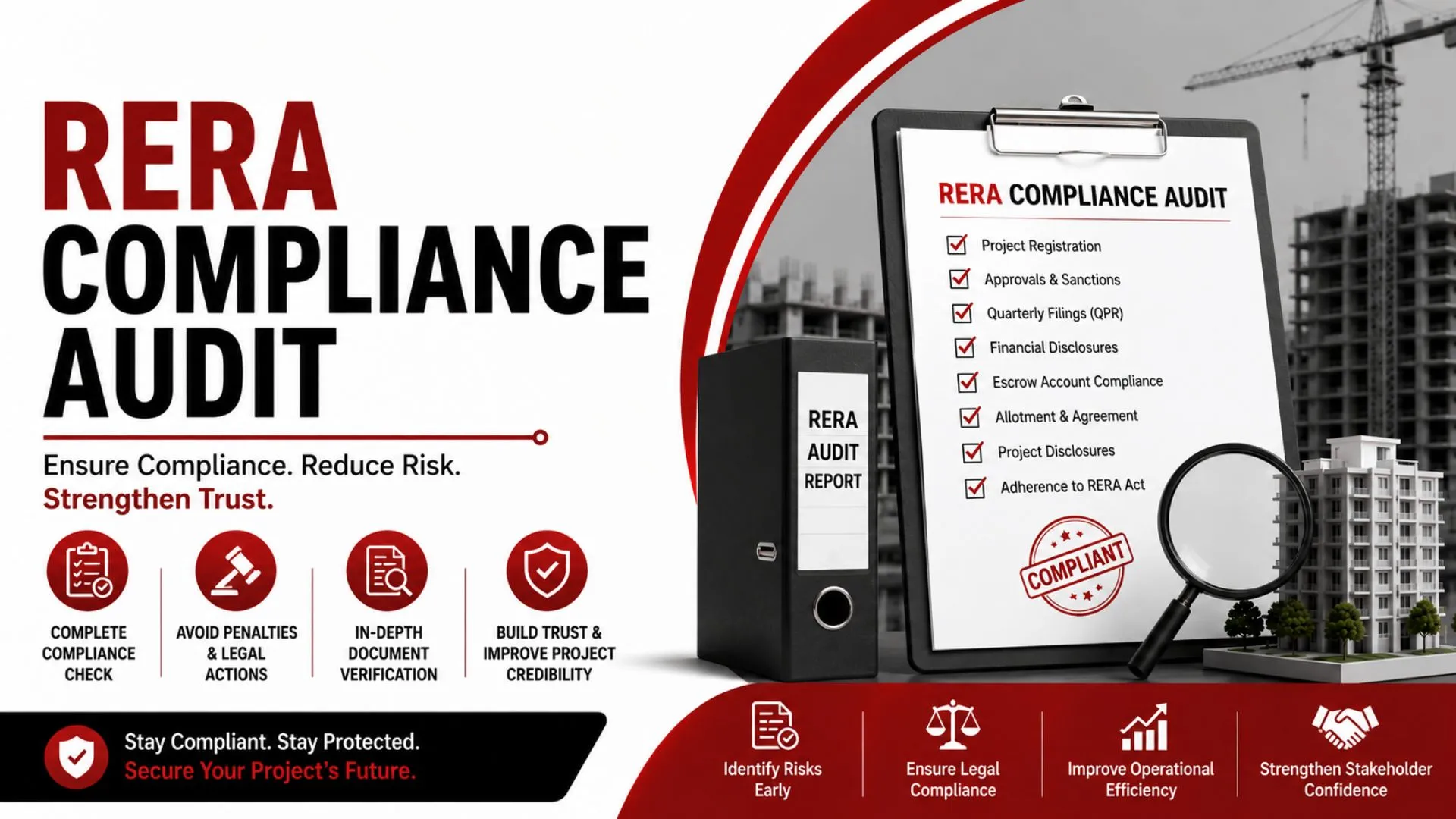
The Indian real estate market is also transforming, and adherence to regulations is on the agenda of every developer in the country. Transparency and accountability are not a choice anymore, with more stringent rules and consumers becoming more aware. Developers in 2026 need to pay particular attention to carrying out an appropriate RERA Compliance Audit, with a specific objective to make sure that all projects fulfill the law and state RERA requirements.
An extensive RERA Compliance Audit assists the developers in recognizing the areas of non-compliance, financial transparency, and legal risks. It also guarantees that projects are finished on time and with the buyer's trust. Authorities will be increasingly vigilant in enforcing compliance, and those who fail to comply could be subject to a penalty, delay of approval, or damage to their reputation.
This is where a platform such as ReraOne can be of great significance. ReraOne enables developers to simplify the process of compliance management, keep track of project documentation, and even make regulatory reporting processes easier. Developers can streamline all aspects of RERA Compliance Audit using digital tools and automation.
Consumers will want projects that are transparent in the process and comply with regulations in today's competitive market. An RERA Compliance Audit will not only prevent developers from facing legal issues but will also build brand credibility and investor trust.
This guide will find the full RERA Compliance Audit checklist for developers in 2026, ranging from the registration process, documentation requirements, financial compliance, project disclosures, and best practices for long-lasting success.
A RERA Compliance Audit is a step-by-step process to validate that a real estate project adheres to all the provisions set by the Real Estate (Regulation and Development) Act. Project approvals, financial records, legal documents, project construction, and practices of communication with buyers are all assessed in an audit.
The main reason for a RERA Compliance Audit is to bring transparency, accountability, and ethics to project management. To avoid regulatory problems, developers need to be diligent in record-keeping and ensuring that they provide regular updates.
The present scenario is the technology-driven RERA Compliance Audit process in 2026, which is more detailed and advanced than ever before.
State RERA officials are rolling out Digital Compliance systems, which enable real-time monitoring of projects. A timely RERA Compliance Audit keeps developers in good standing to be ready for inspections and penalties.
Today's buyers will meticulously examine the transparency of a project before investing. Today's buyers will look at project transparency in great detail before investing. A well-done RERA Compliance Audit creates trust and enhances buyers' confidence.
One of the most important aspects of a RERA Compliance Audit is Financial Transparency. Developers are required to keep a proper escrow account that must be properly used in an ethical way.
Compliance reviews can be carried out on a regular basis to detect any problems early and avoid the legal tangle. A “proactive” RERA Compliance Audit reduces RERA litigation risk and regulatory notices.
The start of each RERA Compliance Audit is the Project registration. All the developers should register their projects in the respective state RERA.
Important Checks:
The project can lead to huge fines and legal ramifications if it is not registered.
Documentation of the land is a crucial aspect of the RERA Compliance Audit.
Documents to show for reference:
Poor land documentation can cause approvals to be delayed and affect the credibility of the project.
In the RERA Compliance Audit, the builders have to verify that all construction approvals are valid and up to date.
Essential Approvals:
One of the most common causes of compliance issues is a lack of approvals.
Transparency in finances is one of the most crucial factors of a successful RERA Compliance Audit.
Financial Checklist:
Good financial management will defend developers against misappropriation of funds.
According to the RERA rules, transparency is compulsory. Project disclosures should be a key component of any RERA Compliance Audit.
Disclosure Requirements:
You should regularly update information on the state RERA portal for developers.
To keep the standards of compliance, there should be marketing transparency.
Audit Checklist:
An ethical marketing strategy makes buyers more trustworthy, which in turn helps to enhance the reputation of the project.
The Agreement for Sale document is an important document during the RERA Compliance Audit process.
Key Elements:
When there are wrongful or wrongful agreements, it can bring legal issues for the developer.
Construction monitoring helps to deliver the project within the stipulated time.
Important Checks:
RERA Compliance Audit is made simple with regular monitoring, and compliance risk is minimized.
It is important to communicate with the buyer, as this is one of the compliance requirements.
Communication Checklist:
Communication is the key to customer satisfaction and to building project credibility.
The last phase of RERA Compliance Audit is Project Completion & Handover Compliance.
Final Compliance Checks:
If these formalities are not completed, the issue may get in the way of dispute and even lead to regulatory measures.
Even seasoned developers encounter problems in the compliance process.
Slow approvals may impact project schedules and cause compliance issues.
One of the most common problems that is found during a RERA Compliance Audit is missing or incorrect records.
Penalties and buyer complaints can be received for mismanaging funds.
If the project information is not updated on a regular basis, it could result in warnings from the authorities.
Continuing court cases about land or project approvals may make it more difficult to manage compliance.
Today, platforms such as ReraOne make it easier for developers to automate compliance tracking, manage project documentation, streamline reporting, etc.
Internal checks for compliance should be carried out by the developers prior to official checks.
Good Document Management allows for easier audits and reduces compliance risks.
Compliance needs should be understood very well by finance, legal, and project management teams.
Proper communication with stakeholders and bodies helps build trust and regulatory credibility.
The world of compliance is changing, and technology in 2026 is to the fore. The RERA Compliance Audit process is becoming more efficient and transparent with the use of digital tools.
ReraOne's solutions help developers to optimize processes and ensure high accuracy of compliance throughout the project life cycle.
A uniform RERA Compliance Audit strategy is beneficial to the developers in several long-term ways.
The clearer the project, the more buyers and investors will be drawn in.
Routine audits allow the detection of issues of compliance in early stages.
There is increased market credibility for the developers, who practice ethical development.
When developers are pre-approved for compliance, they may have a smoother approval process.
A compliance process is structured that enhances accountability and the use of funds.
Technology-based compliance systems will be crucial to the real estate industry's future. Police will be making the following announcements:
The developers who invest in robust compliance systems now will be more ready for upcoming changes in compliance regulations.
With the Indian real estate industry getting more regulated and consumer-centric, compliance is key to its continued success. A detailed RERA Compliance Audit assists developers in assuring transparency and legal accountability, and helps them run their projects smoothly from registration to possession.
It is not possible for developers to take compliance as a one-time thing in 2026. Rather, they need to implement continuous monitoring systems, keep track of records, and have better communication with buyers and authorities. The proactive RERA Compliance Audit approach minimises legal risks, enhances brand reputation, and optimises operations.
Compliance solutions such as ReraOne enable developers to streamline their documentation, automate their reporting, and efficiently handle their regulatory needs. Developers can use technology and adhere to a checklist for compliance to keep ahead of regulatory changes and to create trustworthy real estate developments.
In the end, the importance of having a robust RERA Compliance Audit process extends beyond mere compliance with the regulations; it's about fostering transparency, gaining buyer trust, and securing the long-term success of India's real estate sector.
Our experts are here to help.